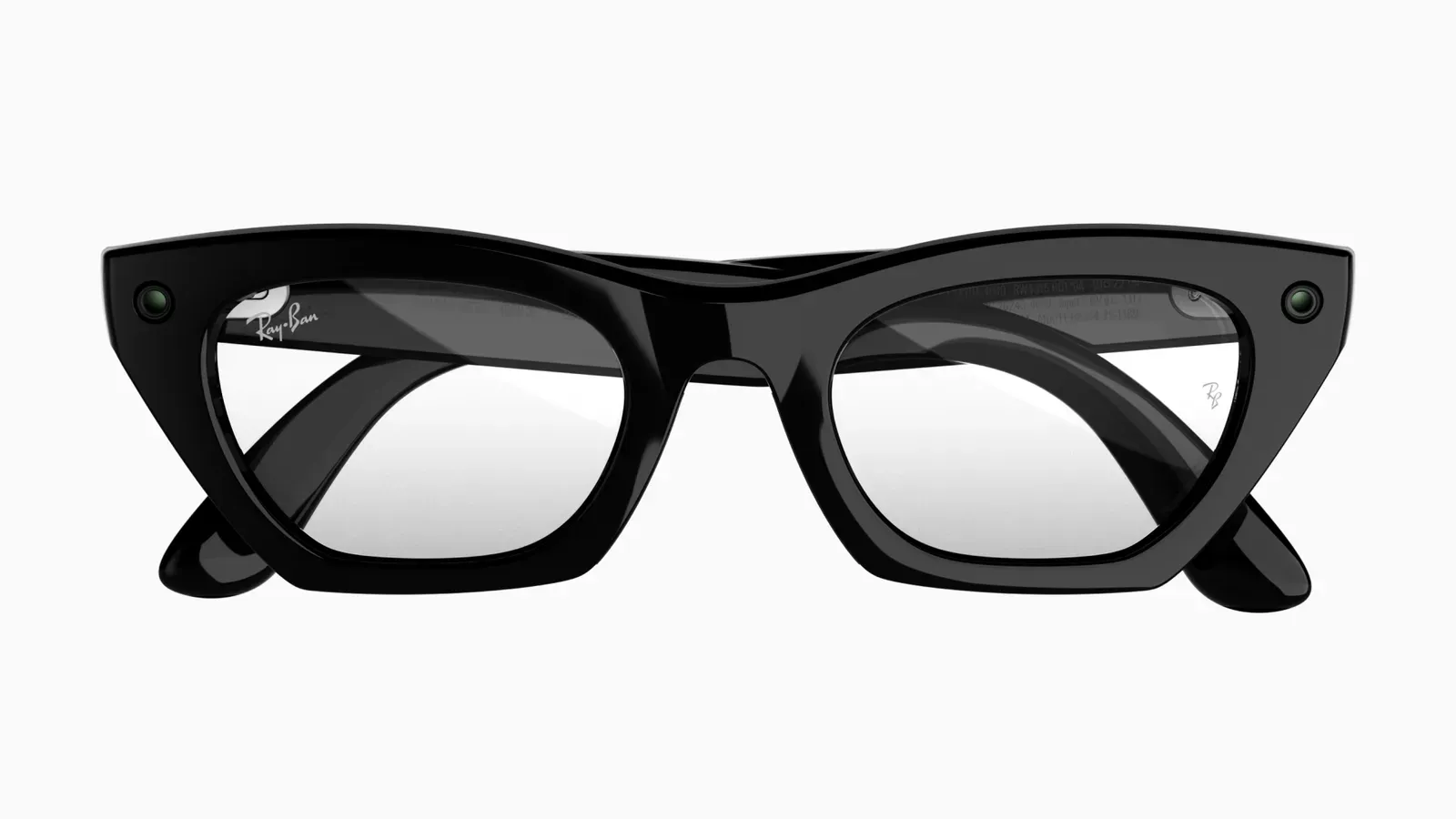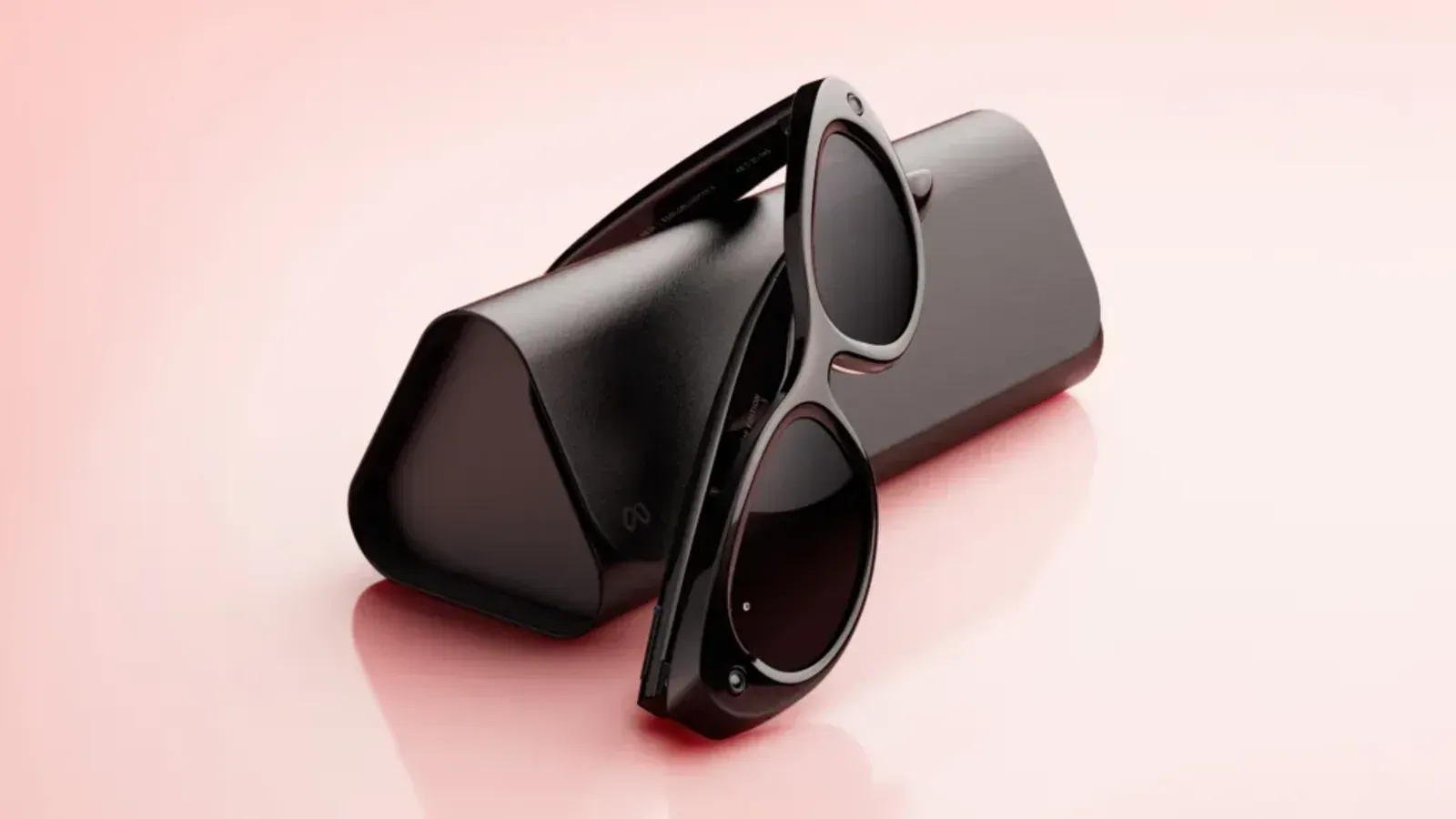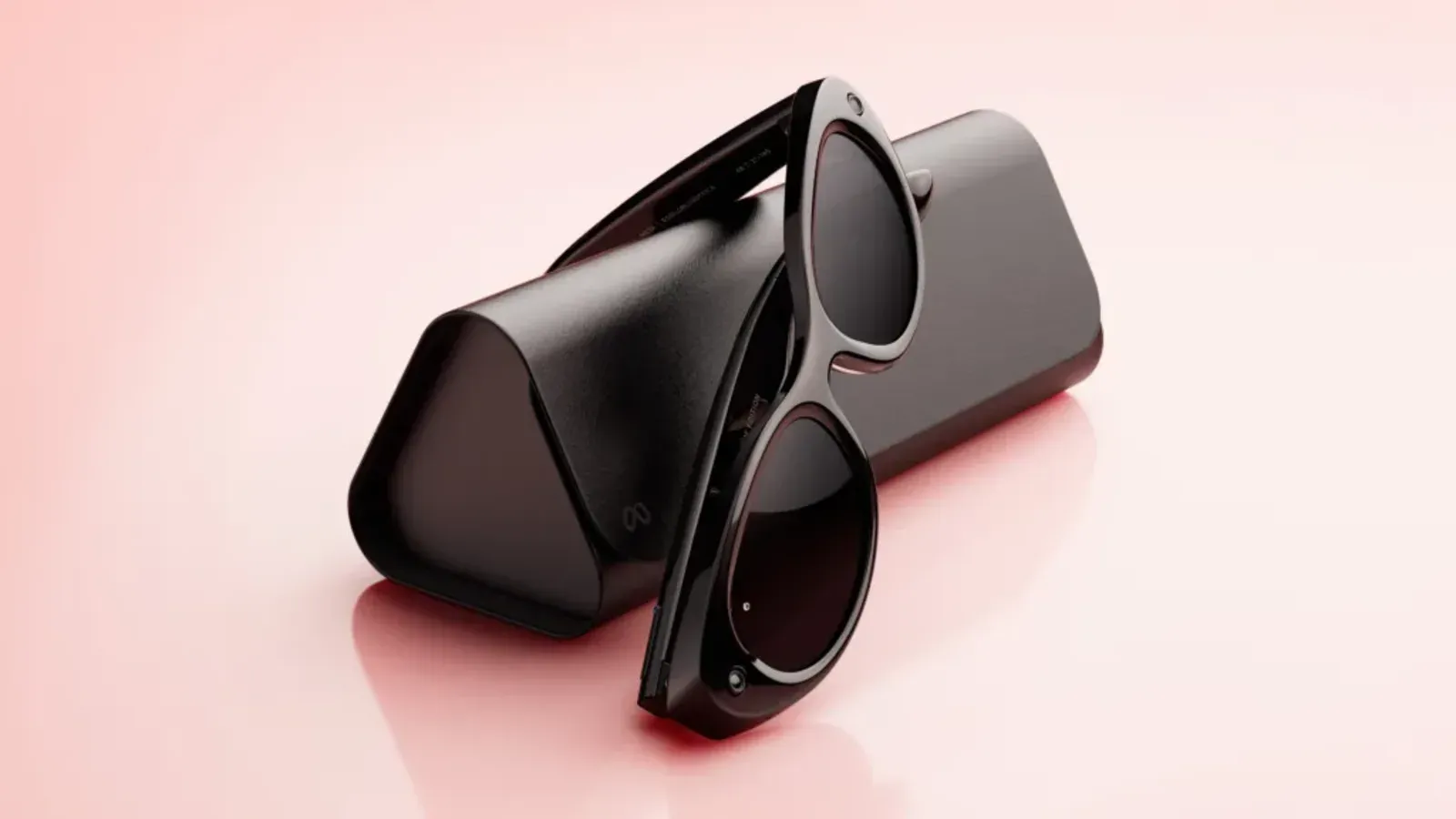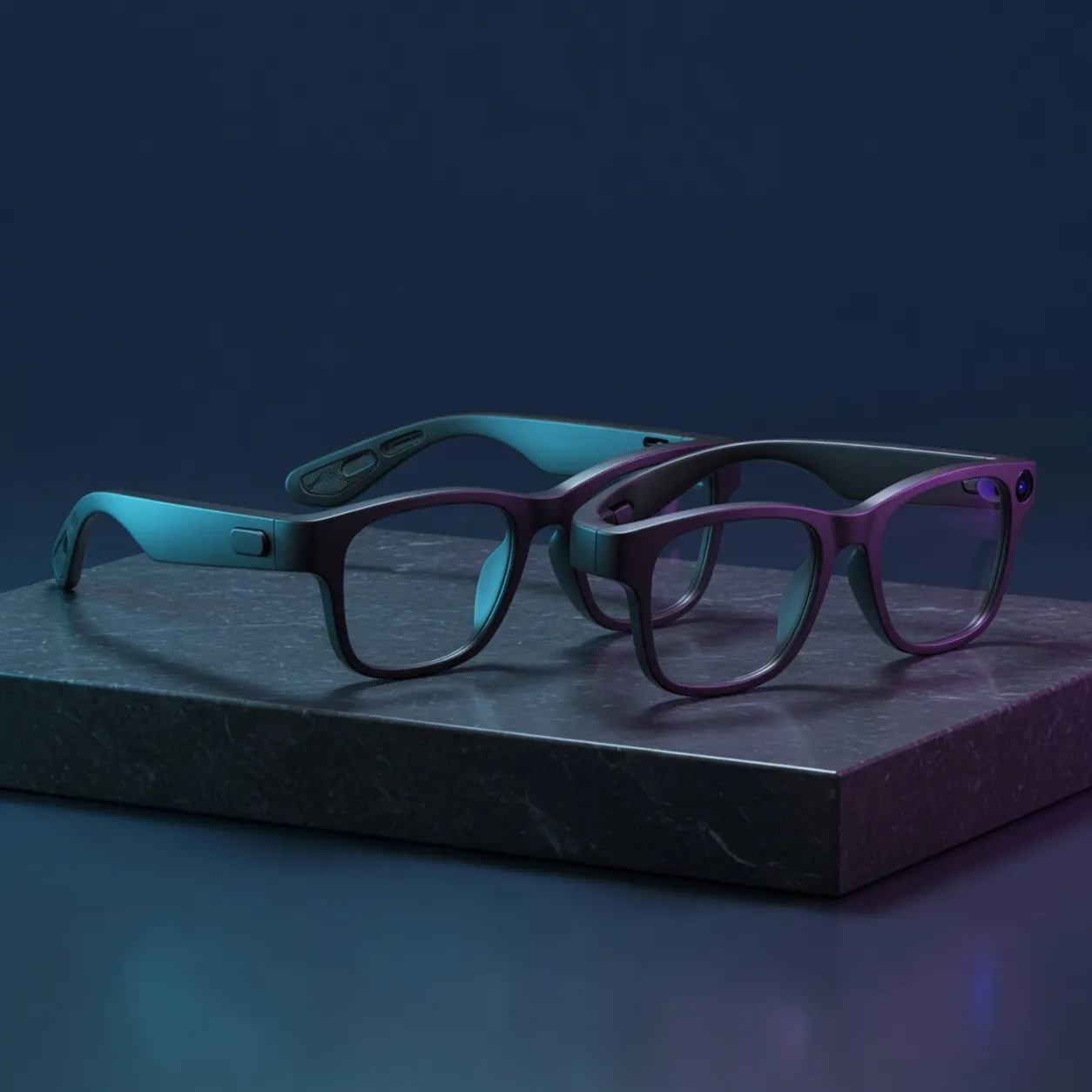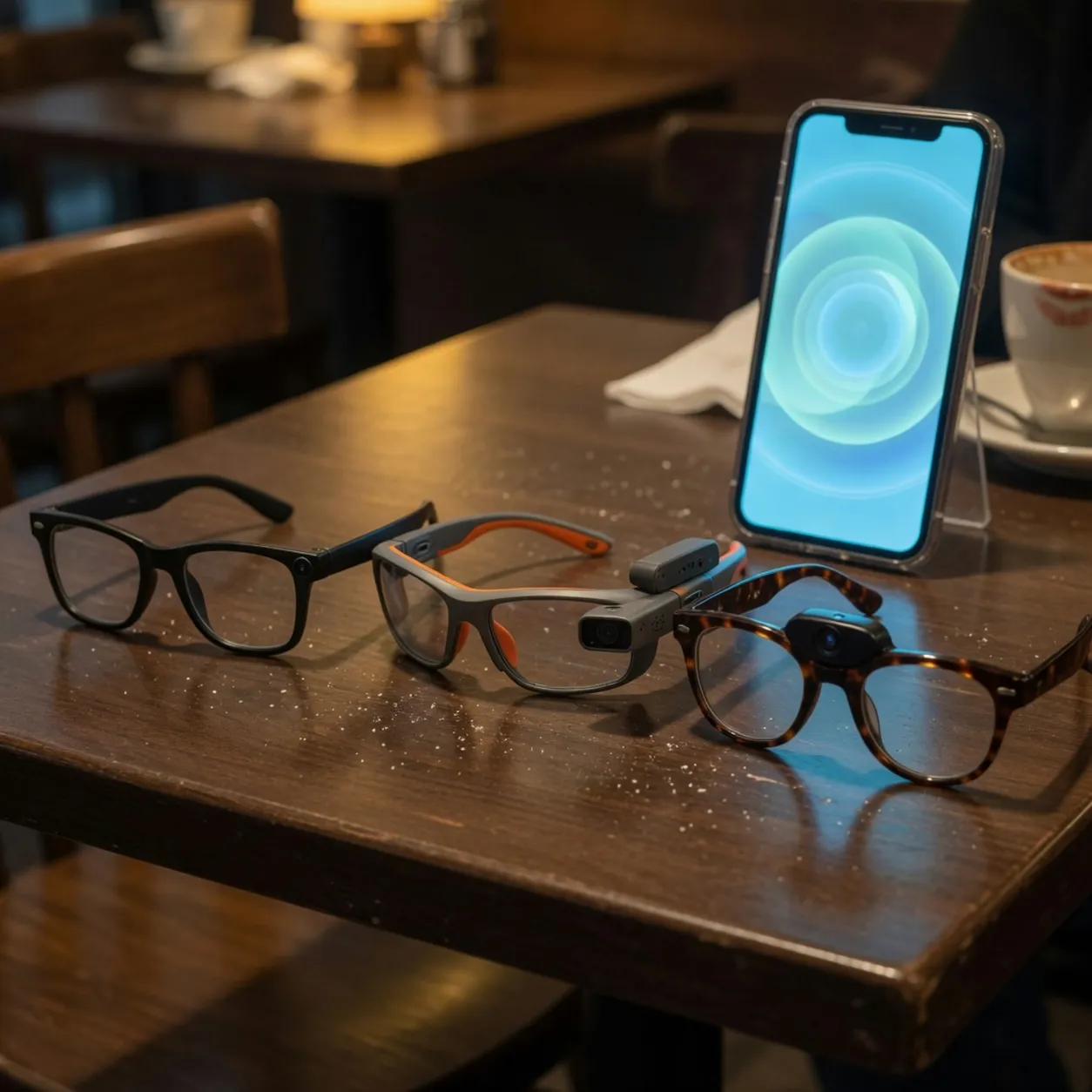
ZuckOff is a phone app that scans nearby Bluetooth broadcasts for signs of camera glasses. It can flag Ray-Ban Meta, Oakley Meta, and Snap Spectacles, then rate each match as possible, likely, or strong.
The alert answers a narrow question. It can indicate that supported glasses are nearby. It cannot tell whether their owner is taking a photo or recording video.
How ZuckOff identifies glasses
Bluetooth devices broadcast identifying information. ZuckOff compares those broadcasts with a catalog of manufacturer signatures, service identifiers, and product names.
Its catalog includes manufacturer ID 0x0D53 for Luxottica, which covers Ray-Ban Meta and Oakley Meta glasses. It also lists 0x058E for Meta Platforms Technologies wearables, 0x03C2 for Snap Spectacles, and the 0xFD5F service identifier registered to Oculus VR.
Names such as Spectacles, HeyCyan, and VistaView can also produce matches at lower confidence. The result screen shows the matching identifier as well as its possible, likely, or strong rating. That detail helps a user distinguish a broad name match from a stronger device signature.
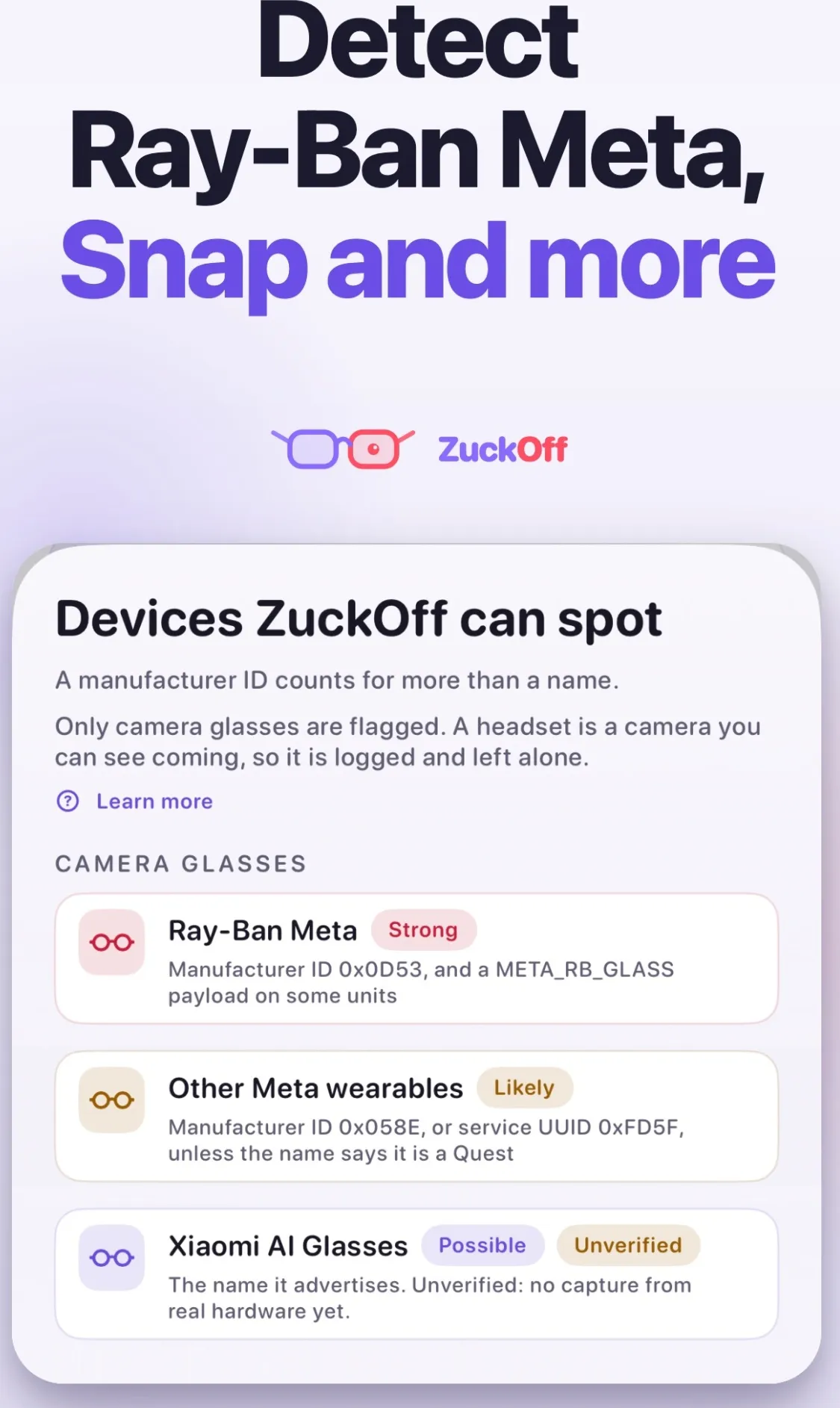
Image: ZuckOff / Pawel Szydlowski, via MIXED Reality News.
The app lists Quest and Apple Vision Pro headsets in its log without raising a camera-glasses alert. Its detection rules focus on eyewear that may be harder for a bystander to recognize.
Why an alert does not mean recording
ZuckOff listens for a device's Bluetooth activity, not its camera state. Glasses tend to advertise more when they power on, pair with a phone, or leave their case. A pair that is already connected to its owner's phone may broadcast less or fall silent.
That creates limits in both directions. A detection shows that a matching device is within Bluetooth range, but it provides no evidence that the camera is active. A quiet scan also cannot rule out nearby glasses.
The app estimates rough distance through signal strength and presents proximity bands. It does not give a direction or point toward a wearer.
What is free and what Pro adds
The free version scans while the app is open on screen. In the US, ZuckOff Pro costs $9.99 per year after a one-week trial, or $24.99 for a lifetime license.
Pro adds background monitoring, alerts, a Home Screen widget, more than 24 hours of sighting history, and CSV export. Those features suit repeated monitoring better than a one-time check because the phone can report matches while the app is not open.
MIXED reports that the sighting log stays on the device and the app requires no account. The app has no analytics. Data leaves the phone only when a user submits an unrecognized device for possible addition to the catalog.
Developer Pawel Szydlowski released the first version on August 6. Version 1.2.2 followed on September 18, and the Google Play listing had passed 1,000 downloads when MIXED checked it.
ZuckOff is independent of Meta, Luxottica, Ray-Ban, Oakley, and Snap. Its value depends on keeping the detection catalog current as manufacturers change models and Bluetooth behavior. Even with a current catalog, the app remains a nearby-device scanner rather than a recording detector.