Head to head · specs checked Oct 2026
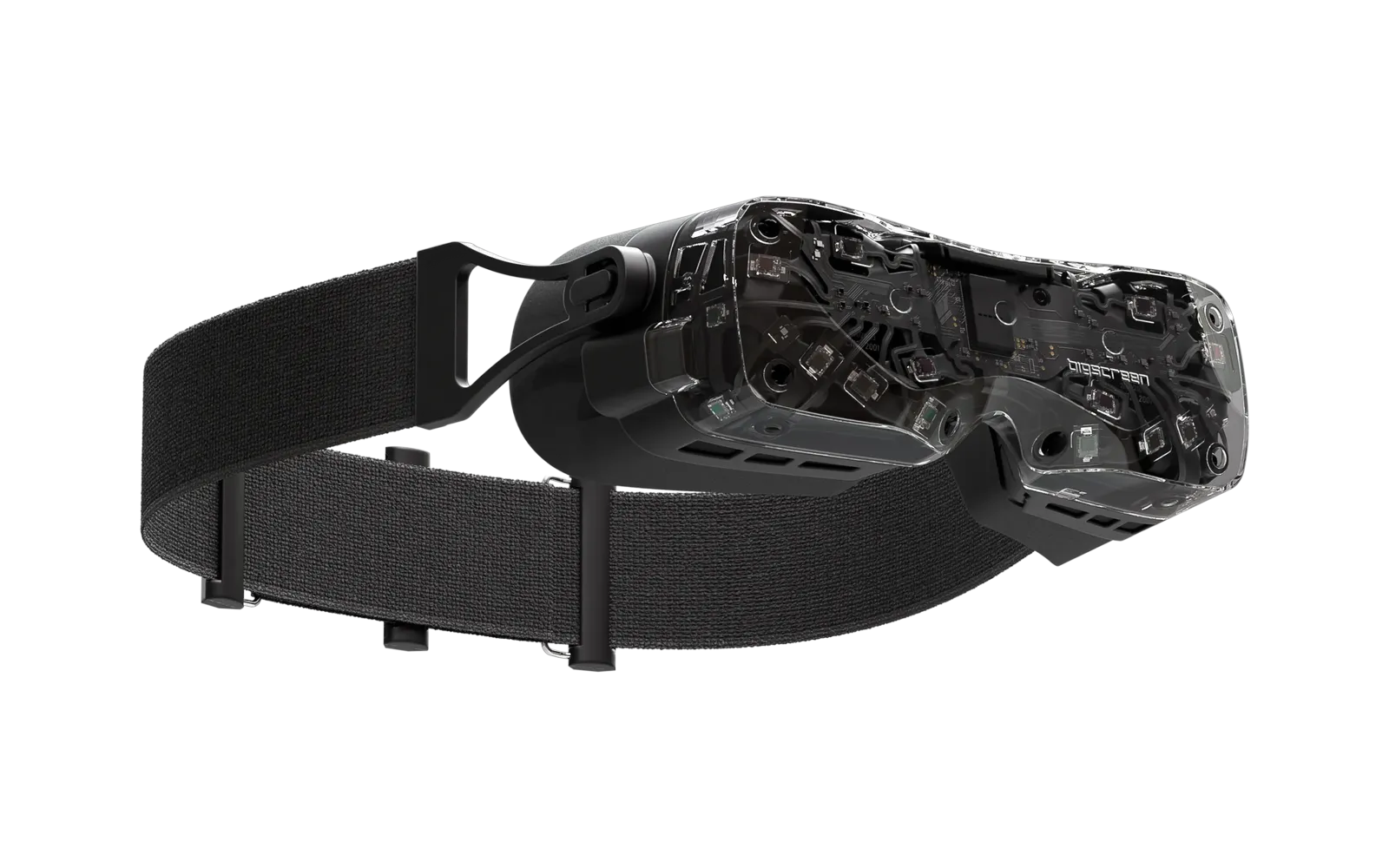
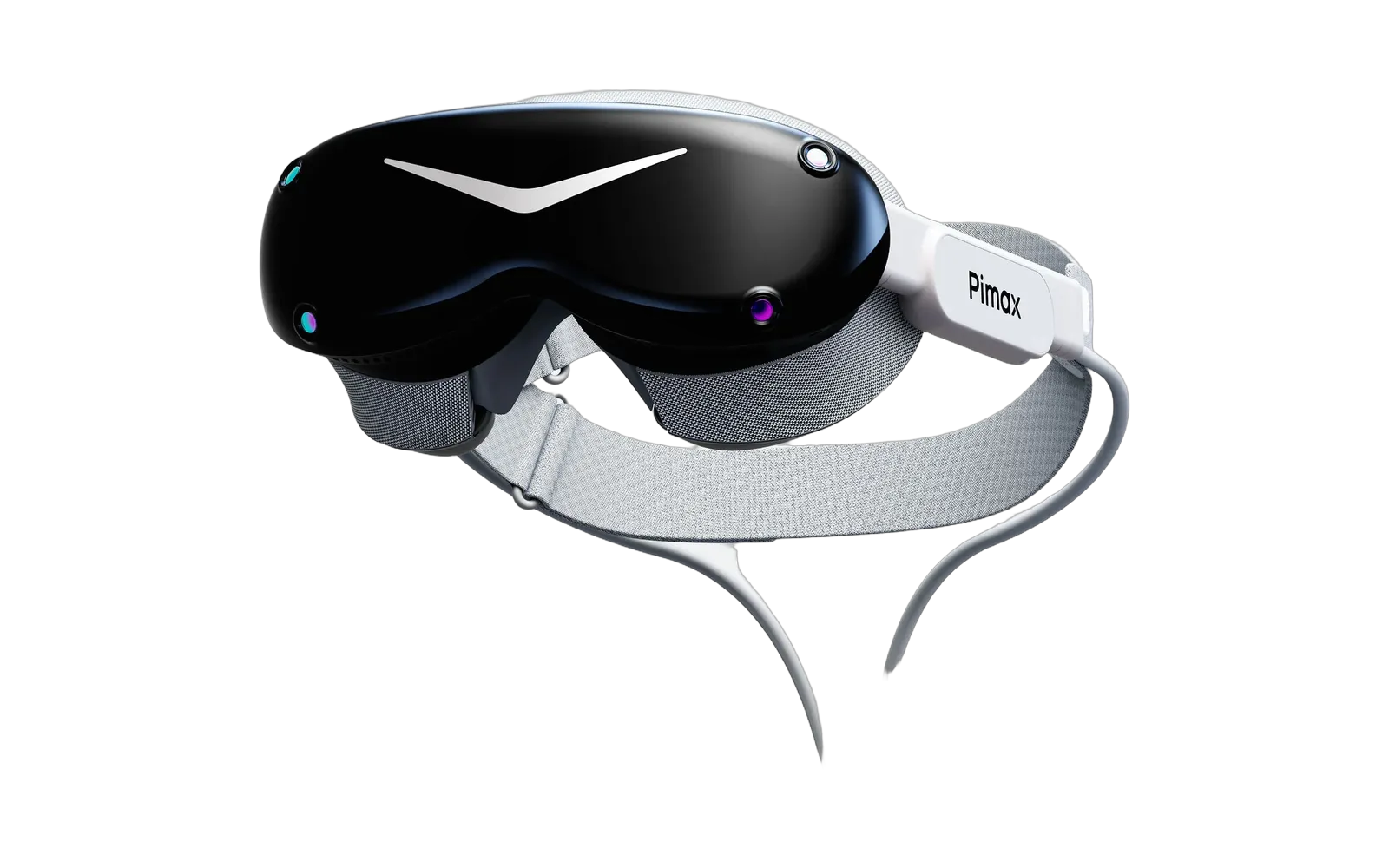
Bigscreen Beyond 2 vs Pimax Dream Air
These are both light micro-OLED headsets for people committed to wired PC VR. The question is whether Dream Air's higher panel resolution is worth its premium and more uncertain fit experience.
The quick answer
Buy Beyond 2 if you want a tiny PC VR headset mainly to make long sessions easier.
Beyond 2
Buy the Beyond 2 if
- Low weight and long-session comfort are your main priorities
- You already use SteamVR lighthouse equipment
- You are willing to complete a face scan for custom fit
- You prefer the lower typical/list headset price
Watch out forPCVR only, with no standalone library or wireless Meta-style use
Dream Air
Buy the Dream Air if
- Higher micro-OLED panel resolution is a specific priority
- You accept early-owner evidence rather than proven long-term reliability
- You are prepared to change pads if the stock fit hurts
- You tolerate Pimax software and a more awkward cable arrangement
Watch out forEarly-owner and launch-era evidence, with little long-term owner time
Scores by category
0 to 100, the same scale for every headset. Price is left out. How we score
| Category | Beyond 2 | Dream Air |
|---|---|---|
| Overall | 71 | 83 |
| Clarity | 87 | 90 |
| Field of view | 87 | 90 |
| Comfort | 100 | 99 |
| Battery | No battery | No battery |
| Tracking | 33 | 76 |
| Ease of setup | 0 | 30 |
What's actually different
Worked out from the spec sheets, in plain words. What they share is left out.
- 01SharpnessDream Air has 108% more pixels per eye than Beyond 2, so text and small details look crisper.
- 02ComfortBeyond 2 is 63 g lighter than Dream Air on your face.
- 03SetupBeyond 2 needs a gaming PC and SteamVR base stations.
- 04SetupDream Air needs a gaming PC.
- 05Eye trackingOnly Dream Air tracks your eyes, which lets supported games draw the spot you look at in more detail.
Our verdict
Our verdict
Its custom facial fit, low weight, and existing editorial support make it the stronger comfort recommendation, especially if you already own SteamVR lighthouse gear. Choose Dream Air if higher panel resolution and early reports of strong micro-OLED clarity matter enough to accept Pimax software and fit quirks. Its typical/list price is $1999 against Beyond 2's $959, so that choice needs a specific visual priority. Some early Dream Air owners love the balance, while others find the rigid strap and facial interface painful until they change pads. Beyond 2 still has a face-scan process and mixed glare reports, so neither should be bought on the assumption that small automatically means effortless.
Where each one wins
Judged for this matchup. Criteria without a supported judgment are left out.
- ClarityPimax Dream AirDream Air gets a qualified edge from its higher catalog panel resolution and early owner praise for detail. Its resolution is single-source, and reports still mention off-center aberration, so this is not proof of uniformly better edge-to-edge optics than Beyond 2.
- Comfort / long sessionsBigscreen Beyond 2Beyond 2 combines very low weight with custom facial fit and remains the long-session recommendation. Dream Air is also light, but early reports split between excellent balance and painful forehead pressure from the rigid strap and interface.
- Value / budgetBigscreen Beyond 2Typical/list prices are $959 for Beyond 2 and $1999 for Dream Air. Beyond is the more convincing comfort purchase for an existing lighthouse owner; newcomers still need to account for its PC and tracking equipment.
- PC VRBigscreen Beyond 2Close to a tie in basic purpose: both are wired PC-powered headsets with Steam support and no standalone store. Beyond gets the recommendation for a lighthouse owner prioritizing long sessions, while Dream Air asks that buyer to accept early software, cabling, and fit concerns for its display appeal.
Every spec
18 of 18 published specs differ
Display
Panel resolution at both refresh modes; the 90 Hz transport uses DSC and an upscaled 1920×1920 signal.
Manufacturer · checked 2026-09-13
- Bigscreen · Manufacturer · checked 2026-09-13
Manufacturer · checked 2026-09-13
- Bigscreen · Manufacturer · checked 2026-09-13
Manufacturer · checked 2026-09-13
- Bigscreen · Manufacturer · checked 2026-09-13
Optics & field of view
Manufacturer · checked 2026-09-13
- Bigscreen · Manufacturer · checked 2026-09-13
Manufacturer · checked 2026-09-13
- Bigscreen · Manufacturer · checked 2026-09-13
Manufacturer · checked 2026-09-13
- Bigscreen · Manufacturer · checked 2026-09-13
Manufacturer · checked 2026-09-13
- Bigscreen · Manufacturer · checked 2026-09-13
Manufacturer · checked 2026-09-13
- Bigscreen · Manufacturer · checked 2026-09-13
Fit & power
Headset only. The cable, face cushion and strap add weight.
Manufacturer · checked 2026-09-13
- Bigscreen · Manufacturer · checked 2026-09-13
Each lens adjusts independently. The 48–75 mm range describes supported eye spacing, not lens travel.
Manufacturer · checked 2026-09-13
- Bigscreen · Manufacturer · checked 2026-09-13
Tracking & input
Manufacturer · checked 2026-09-13
- Bigscreen · Manufacturer · checked 2026-09-13
Database · checked 2026-09-10 · 1 more
Eye tracking is available on Beyond 2e, not this model.
Manufacturer · checked 2026-09-13
- Bigscreen · Manufacturer · checked 2026-09-13
Database · checked 2026-09-10 · 1 more
Silicon & connection
Manufacturer · checked 2026-09-13
- Bigscreen · Manufacturer · checked 2026-09-13
Other published values
Manufacturer · checked 2026-09-13
- Bigscreen · Manufacturer · checked 2026-09-13
Display
Manufacturer · checked 2026-09-13
- Pimax · Manufacturer · checked 2026-09-13
Manufacturer · checked 2026-09-13
- Pimax · Manufacturer · checked 2026-09-13
Manufacturer · checked 2026-09-13
- Pimax · Manufacturer · checked 2026-09-13
Optics & field of view
Manufacturer · checked 2026-09-13
- Pimax · Manufacturer · checked 2026-09-13
Manufacturer · checked 2026-09-13
- Pimax · Manufacturer · checked 2026-09-13
Fit & power
Headset only. Excludes the cable and fit accessories.
Manufacturer · checked 2026-09-13
- Pimax · Manufacturer · checked 2026-09-13
Manufacturer · checked 2026-09-13
- Pimax · Manufacturer · checked 2026-09-13
Powered by a connected PC; no standalone battery life.
Manufacturer · checked 2026-09-13
- Pimax · Manufacturer · checked 2026-09-13
Tracking & input
Two separately sold configurations; Lighthouse needs one or two base stations, SLAM does not.
Manufacturer · checked 2026-09-13
- Pimax · Manufacturer · checked 2026-09-13
Database · checked 2026-09-10
Pimax's checked Dream Air page does not publish passthrough capability despite listing SLAM cameras.
- vrcompare · Database · checked 2026-09-10
Manufacturer · checked 2026-09-13
- Pimax · Manufacturer · checked 2026-09-13
VRcompare: supported; VR Eddie: not supported.
Database · checked 2026-09-10 · 1 more
Silicon & connection
Manufacturer · checked 2026-09-13
- Pimax · Manufacturer · checked 2026-09-13
Manufacturer · checked 2026-09-13
- Pimax · Manufacturer · checked 2026-09-13
Other published values
 Beyond 22560×2560
 Dream Air3840×3552Beyond 2108°Dream Air110°Beyond 2108°Beyond 296°Beyond 296°Beyond 2116°
▲ Leads marks the best figure in a row, and only where the figures compare like for like: the same measurement conditions, nothing disputed, and one clear leader. Rows where every headset matches get no mark. Panels and fields of view are drawn at one scale for every headset on screen, and each value opens its sources.
What you need to play
The headset, plus anything it cannot run without.
Bigscreen Beyond 2
Typically$959
Full dossier →Pimax Dream Air
Typically$1,999–$2,299 by edition
Full dossier →Before you buy
Questions worth asking
Is Dream Air worth the premium over Beyond 2?
Only if its higher panel resolution and early visual reports address a priority you already have. Beyond 2 is the stronger recommendation for low weight and long-session comfort at a lower typical/list price. Dream Air's fit and software caveats make it a deliberate enthusiast choice.
Can I use either without a gaming PC?
No, both depend on a capable PC and are intended for wired PC VR. Neither gives you a standalone app store or Quest-style wireless use.
Do both need base stations?
Beyond 2 requires SteamVR lighthouse base stations. Dream Air's catalog tracking entry is disputed and some owner reports concern a lighthouse version, so this evidence does not establish one requirement for every configuration. Confirm the specific Dream Air configuration before choosing tracking equipment.
Which is more comfortable for a long session?
Beyond 2 is the recommended choice, with its very low weight and custom fit. Dream Air owners disagree sharply: some praise its balance, while others need different pads to relieve forehead pressure. Low headset weight alone does not settle the fit question.
Should I wait for more Dream Air reviews?
Yes, if you need confidence in long-term daily use. The repo's Dream Air evidence is still dominated by launch and early-owner reports, with strong visual impressions but divided comfort experiences. Beyond 2 is the better-supported long-session choice here, though its custom fit and glare caveats still apply.
More comparisons
As an Amazon Associate, we earn from qualifying purchases. How our links work.