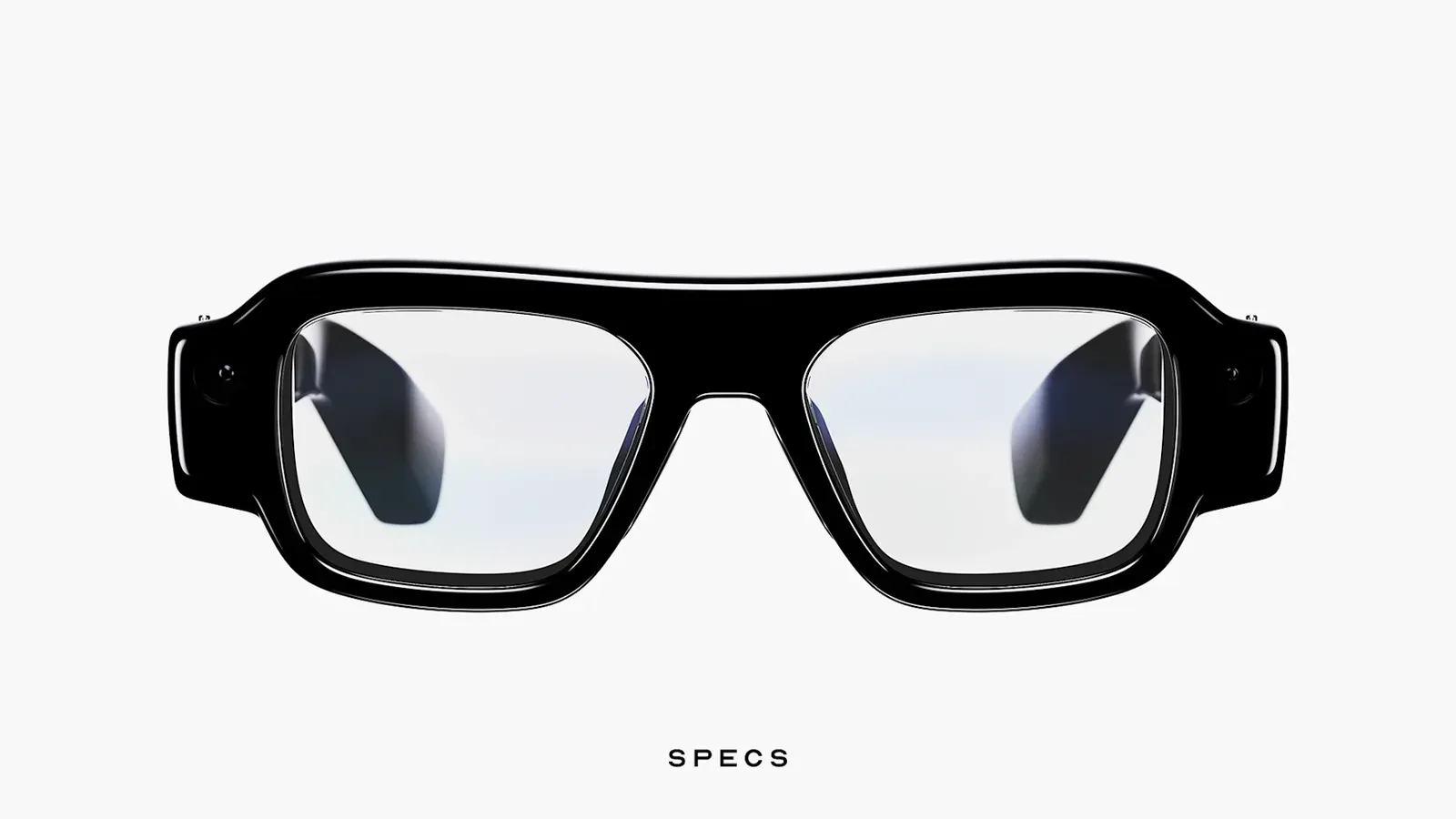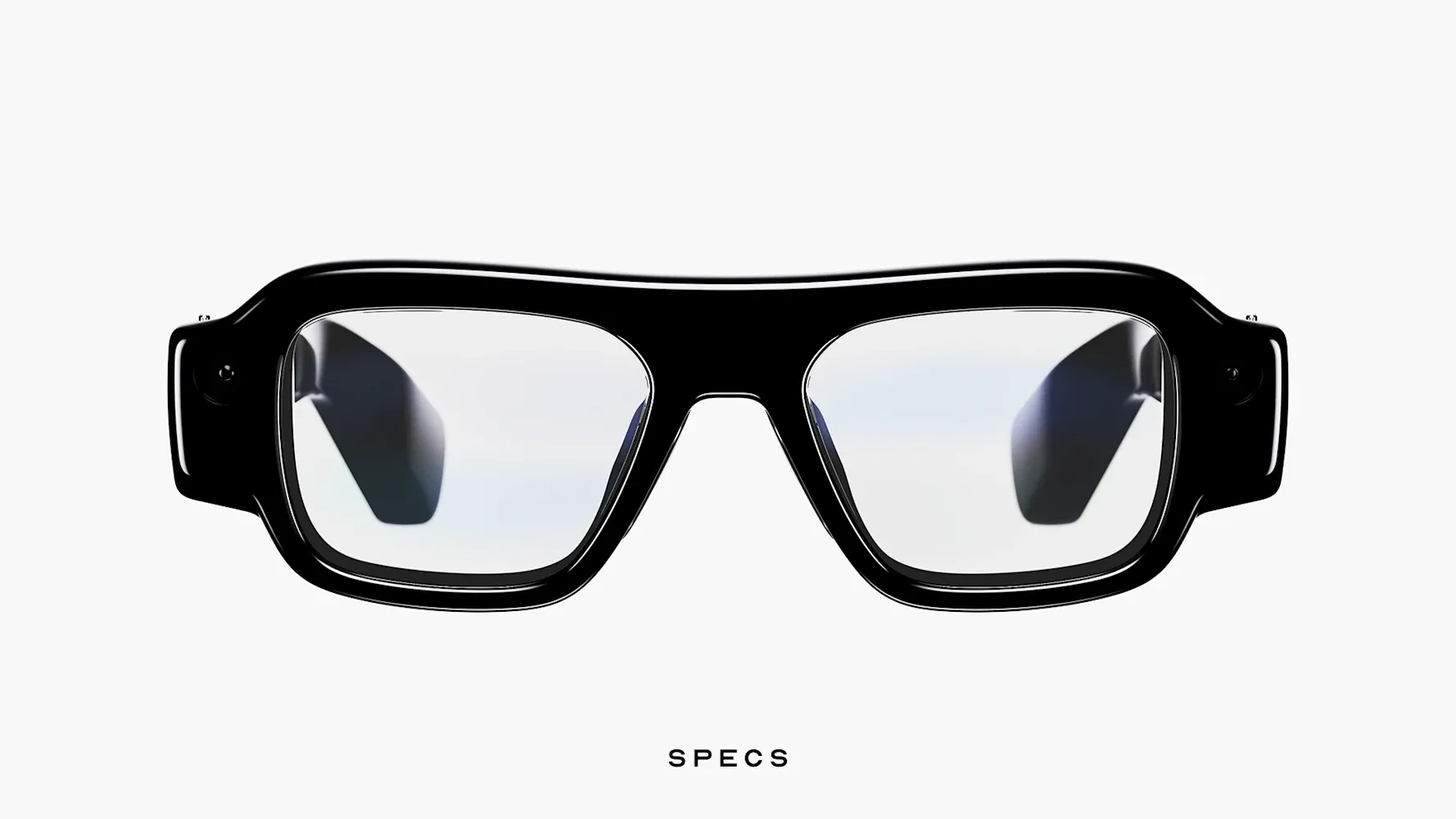
Snap has added two major pieces to its $2,195 Specs pitch. Specs Intelligence is an AI service that will work across the glasses, iPhone, and Mac. An optional cellular charging case will give the glasses a mobile data connection away from Wi-Fi.
The company also put more of the glasses on stage. CEO Evan Spiegel demonstrated the Snap OS interface, messaging, web video, shopping, drawing guidance, and an official Harry Potter experience during a live presentation.
Specs are still due to ship this fall in the United States, United Kingdom, and France. Snap has not announced a specific shipping date.
Specs Intelligence starts with a limited preview
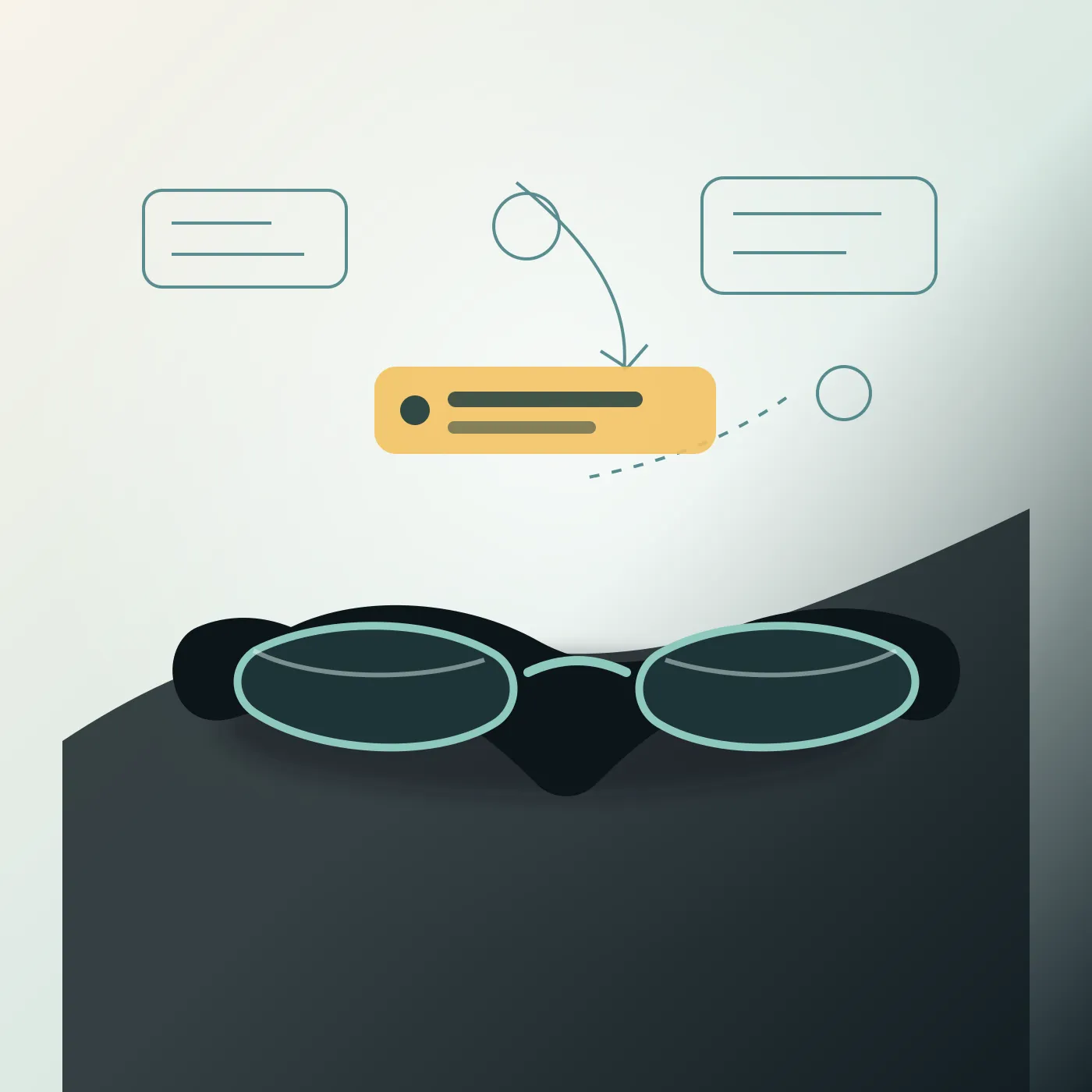
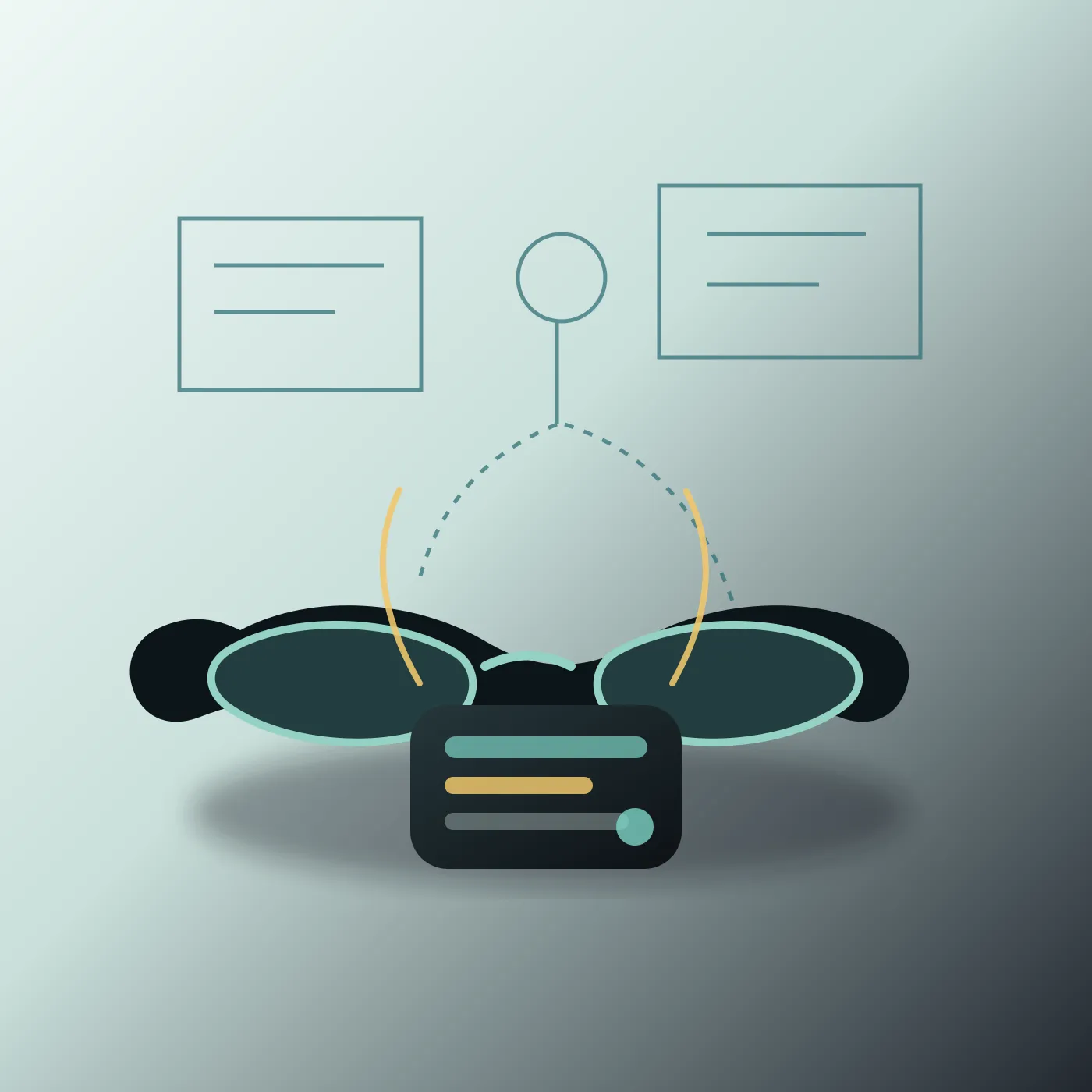
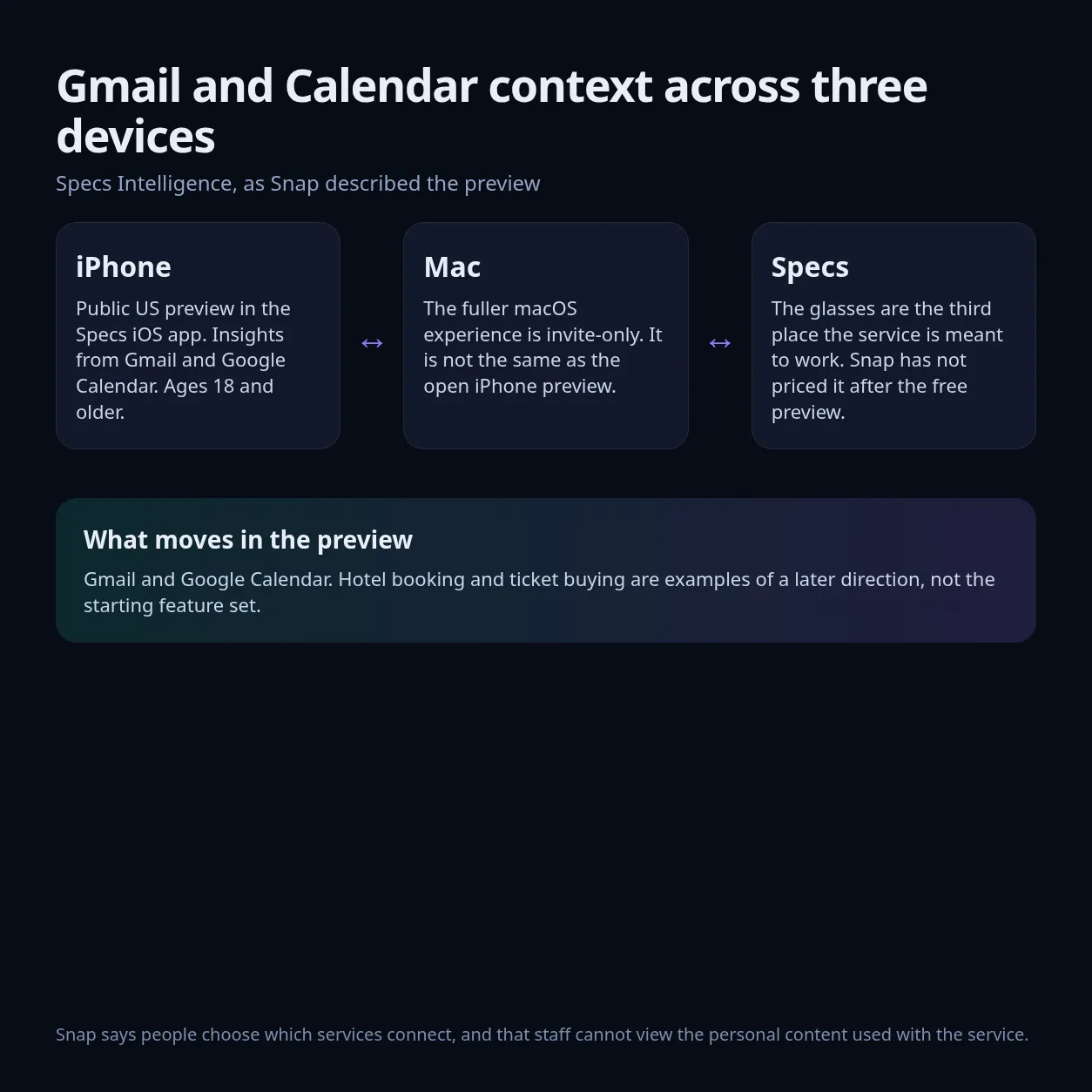
Snap describes Specs Intelligence as an agent that can collect context from connected services and suggest information or actions before the user asks. The company's examples include preparing questions before a meeting, collecting flight and hotel details for a trip, booking hotels, and buying cinema tickets.
Those broader actions are the direction, not the starting feature set. The US public preview on iPhone is limited to insights drawn from Gmail and Google Calendar. It is available through the Specs iOS app for people aged 18 or older. The fuller macOS experience is invite-only.
Snap says people can choose which services they connect and what information the agent can use. The company also says its staff cannot view personal content used with the service. Connected personal content will not train Snap's AI models or select personalized ads, according to the company's statement reported by Road to VR.
Snap has not named the model provider behind Specs Intelligence. It has also not said what the service will cost after the free preview.
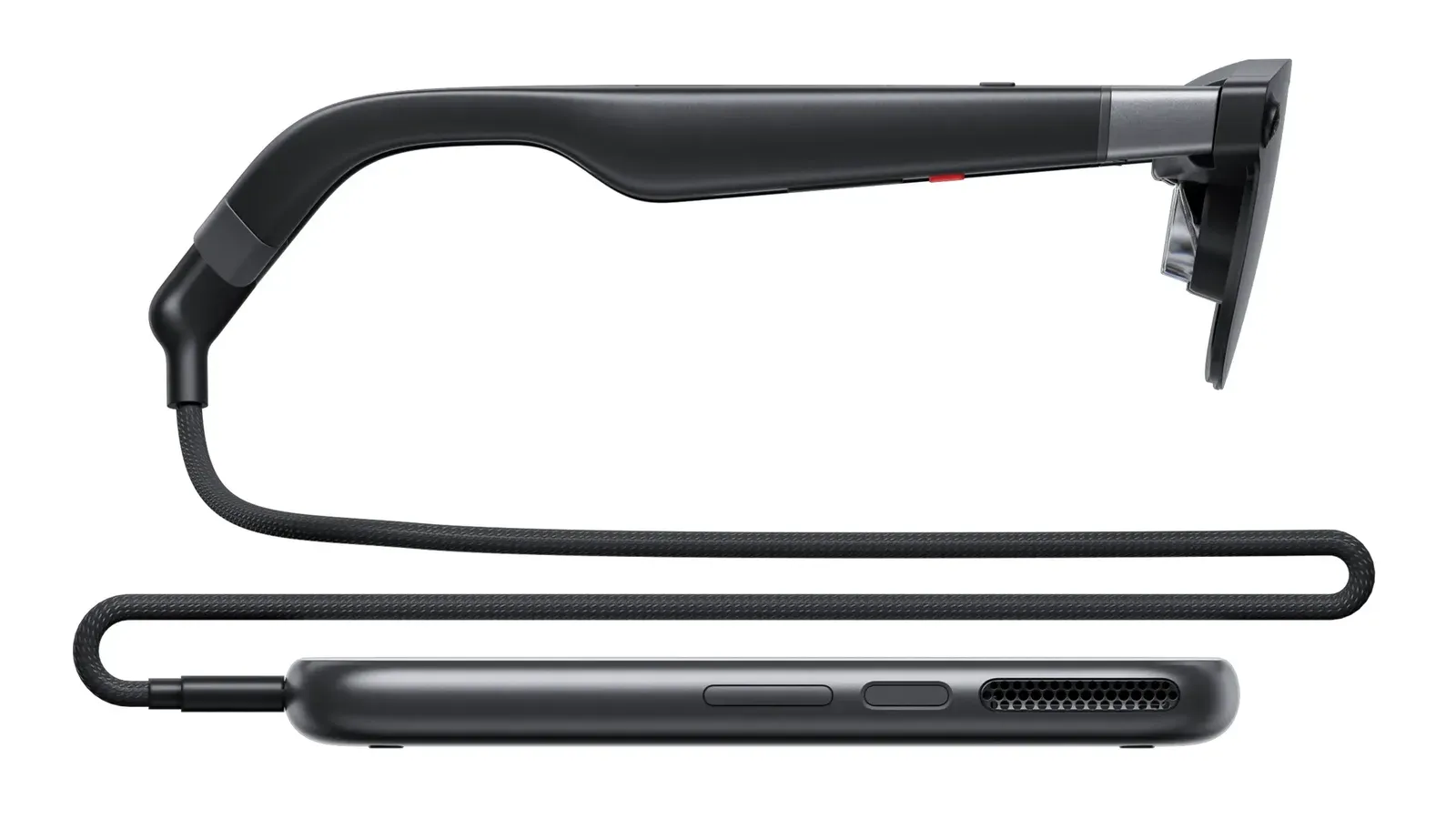
The cellular case adds $200 before service
The standard Specs package costs $2,195 and includes a regular charging case. A bundle with the cellular charging case costs $2,395. Snap says the connected case can provide four additional charges as well as mobile data.
In the US, Verizon will supply service for $10 per month when the buyer also uses Verizon for their phone, or $20 per month otherwise. EE will provide service in the UK, and Orange will do so in France. The carriers will offer financing and selected stores where shoppers can try the glasses.
That makes the US first-year cost at least $2,515 with the lower Verizon rate or $2,635 at the standalone rate, before taxes and other fees. Those totals combine the $2,395 hardware bundle with 12 months of the prices reported for service.
The cellular option matters because Specs are meant for use away from a desk. The sources do not explain whether every app and AI function works over the case's connection, how the case connects to the glasses while stored in a pocket or bag, or how cellular use affects battery life.
What Snap showed on stage
The main interface places shortcuts on the wearer's palms. A finger from the other hand can select Specs Intelligence, the home screen, or quick controls. Apps open as floating windows and use pointing and pinching for interaction.
Spiegel used Snapchat to take and send pictures with a finger snap. In a video call, the person on the other end could see his first-person view. He opened YouTube through a Specs Intelligence request and placed a Shopify product into the room at full scale before buying it.
Other demonstrations included Pencil, an app already available on Quest that teaches drawing with an overlaid path. An HBO Harry Potter experience showed an owl delivering a Hogwarts letter and let the wearer cast a spell.
Snap also announced Spotify, video streaming on a virtual display, translation across 60 languages, navigation, TripAdvisor place information, and a wireless display mode for PC and Mac with Bluetooth keyboard support. Planned shared experiences include chess, table tennis, and dominoes between two Specs wearers.
The company says Specs do not use facial recognition or record audio, video, or images continuously. An exterior LED indicates active recording.
Live stage demos reduce some uncertainty about the interface and app range, but they do not answer the biggest ownership questions. Buyers still need a firm ship date, independent tests of comfort and battery life, and a clear list of what Specs Intelligence can do on the glasses when retail units arrive.