Head to head · specs checked Oct 2026
Apple Vision Pro (M5) vs Meta Quest 3
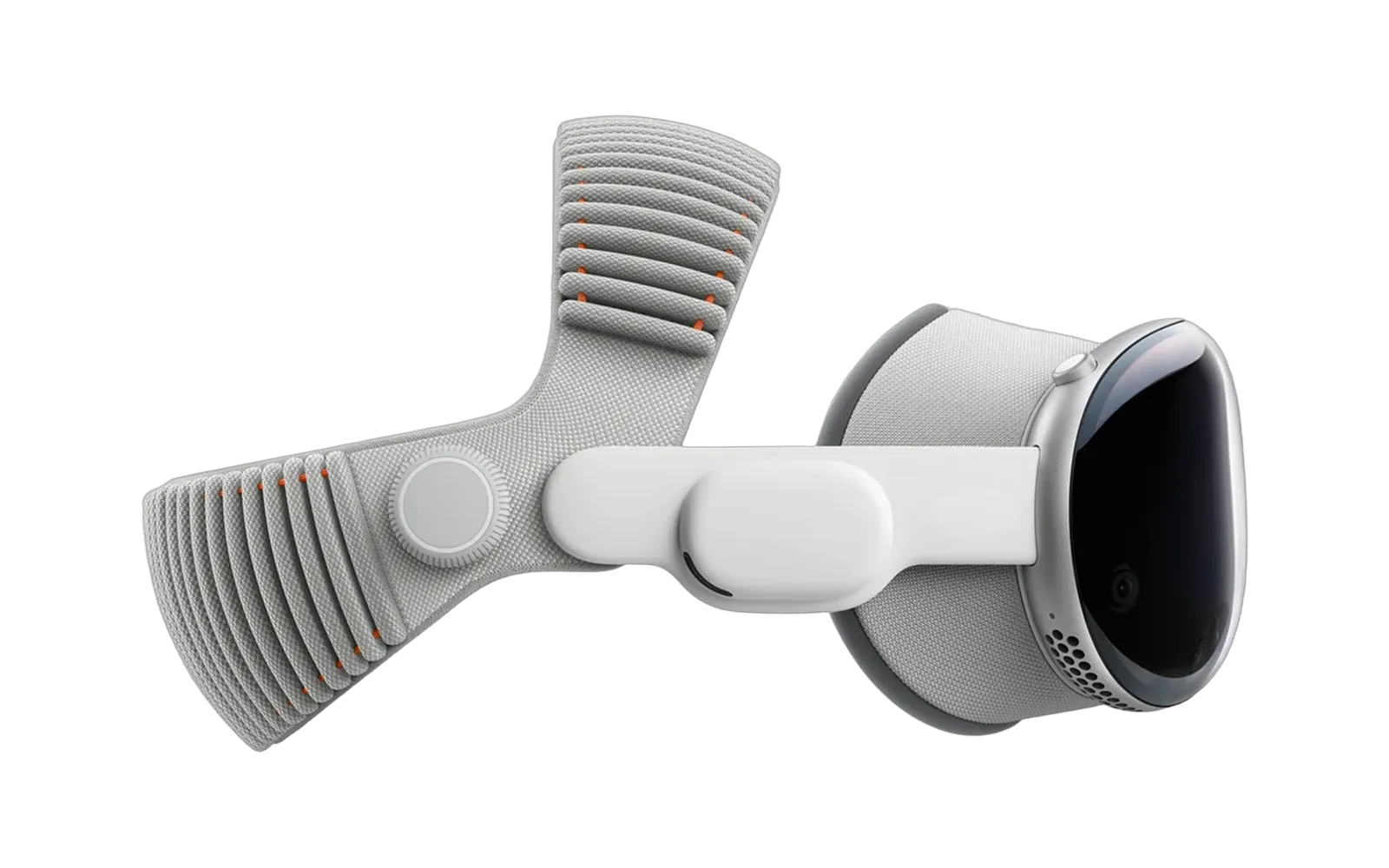
M5 makes Apple's spatial apps more responsive, but it does not change who should buy Vision Pro. This is still a choice between a premium Apple workspace and a more broadly useful games and mixed-reality headset.
The quick answer
Buy Quest 3 unless you already know which Apple spatial workflows you want Vision Pro for.
Vision Pro (M5)
Buy the Vision Pro (M5) if
- You already use Mac and iPhone workflows that suit spatial windows
- Spatial photo and scene creation matter more than VR games
- You want micro-OLED fidelity for media and spatial apps
- You accept a heavy headset with a tethered battery
Watch out forEnterprise price with no mainstream game library. Quest 3 remains the default for most people, standalone play, and everyday MR
Quest 3
Buy the Quest 3 if
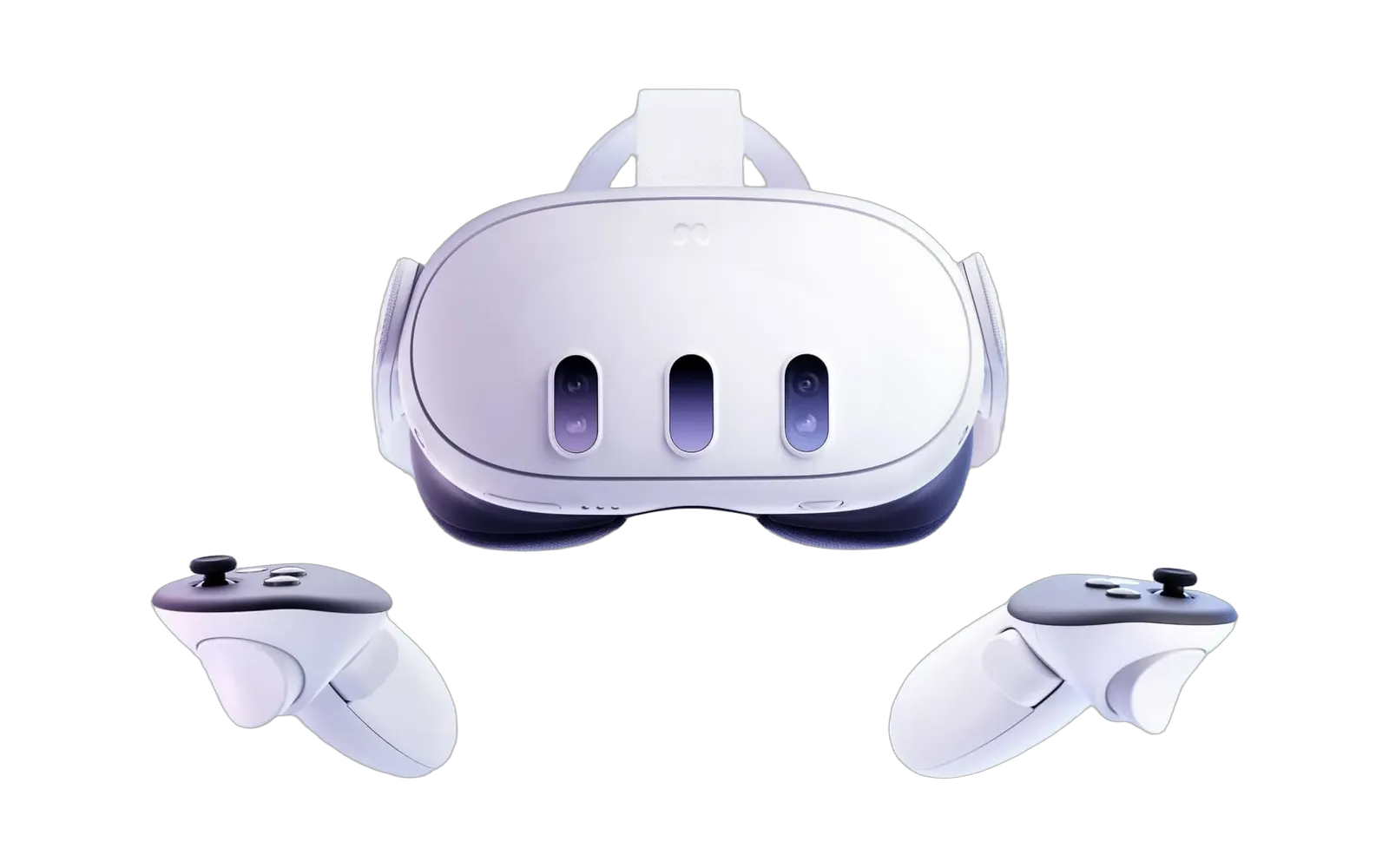
- Games are the main reason you want a headset
- You want the stronger everyday mixed-reality purchase
- A mainstream typical/list price matters more than Apple integration
- You want optional wireless PC VR as well as standalone apps
Watch out forStock strap is a common first complaint; budget a better one
Scores by category
0 to 100, the same scale for every headset. Price is left out. How we score
| Category | Vision Pro (M5) | Quest 3 |
|---|---|---|
| Overall | 87 | 86 |
| Clarity | 100 | 88 |
| Field of view | 75 | 90 |
| Comfort | 62 | 85 |
| Battery | 85 | 79 |
| Tracking | 97 | 77 |
| Ease of setup | 100 | 100 |
What's actually different
Worked out from the spec sheets, in plain words. What they share is left out.
- 01PriceQuest 3 typically costs $2,899 less than Vision Pro (M5).
- 02SharpnessVision Pro (M5) has 157% more pixels per eye than Quest 3, so text and small details look crisper.
- 03PictureVision Pro (M5) uses an OLED panel, with true blacks and richer dark scenes than the LCD in Quest 3.
- 04ComfortQuest 3 is 260 g lighter than Vision Pro (M5) on your face.
- 05ViewQuest 3 shows 10° more side to side than Vision Pro (M5), going by the makers' figures.
- 06Eye trackingOnly Vision Pro (M5) tracks your eyes, which lets supported games draw the spot you look at in more detail.
Our verdict
Our verdict
At a typical/list $599 versus $3499 for M5 Vision Pro, it is the better purchase for standalone games, everyday mixed reality, and optional wireless PC VR. Choose M5 Vision Pro for micro-OLED fidelity, Mac and iPhone continuity, and spatial creation that benefits from the newer chip. The M5 editorial points to snappier spatial photos, scenes, and interactive apps, rather than a transformation of the game library. Its panels, exterior, passthrough cameras, and tethered battery remain the same as the M2 model's. Band and counterweight options help some owners, but this is still a heavy headset whose fit you should take seriously before treating it as an everyday workspace.
Where each one wins
Judged for this matchup. Criteria without a supported judgment are left out.
- ClarityApple Vision Pro (M5)M5 retains Vision Pro's high-resolution micro-OLED display stack, which is its advantage for media and spatial windows over Quest 3's LCD. The advantage is the display fidelity it carries over from M2, not a new panel.
- Library / standaloneMeta Quest 3Quest 3 is the stronger standalone gaming purchase. M5 improves the responsiveness of Apple spatial apps, but Vision Pro's mainstream VR game library remains thin by comparison.
- Value / budgetMeta Quest 3Quest 3's typical/list $599 fits a general-purpose headset purchase much better than M5 Vision Pro's $3499. M5 is worth considering only when its Apple workflows are valuable to you in their own right.
- Mixed realityMeta Quest 3Quest 3 remains the everyday MR recommendation for its library, usable passthrough, and value. Faster spatial creation on M5 is a specialist reason to choose Apple, rather than a reason to reverse that general recommendation.
Every spec
14 of 17 published specs differ
Display
Apple gives 23 million pixels across both displays, not a figure per eye.
Manufacturer · checked 2026-09-28
- Apple Support · Manufacturer · checked 2026-09-28
Manufacturer · checked 2026-09-13
- Apple Support · Manufacturer · checked 2026-09-13
Manufacturer · checked 2026-09-13
- Apple · Manufacturer · checked 2026-09-13
Optics & field of view
Database · checked 2026-09-10
Apple's checked technical specifications do not name the lens architecture.
- eddie · Database · checked 2026-09-10
Database · checked 2026-09-10
Apple publishes no FoV number in the checked official product or specification pages; the catalog's 100° value is not manufacturer-supported.
- eddie · Database · checked 2026-09-10
Fit & power
Varies by configuration. The separate 353 g battery is not included.
Manufacturer · checked 2026-09-13
- Apple Support · Manufacturer · checked 2026-09-13
Supported eye spacing; this is not a manual lens-adjustment range.
Manufacturer · checked 2026-09-13
- Apple Support · Manufacturer · checked 2026-09-13
Uses an external battery and works while charging. The three-hour rating is for video playback.
Manufacturer · checked 2026-09-13
- Apple Support · Manufacturer · checked 2026-09-13
Tracking & input
Manufacturer · checked 2026-09-13
- Apple · Manufacturer · checked 2026-09-13
Manufacturer · checked 2026-09-28
- Apple Support · Manufacturer · checked 2026-09-28
Manufacturer · checked 2026-09-13
- Apple · Manufacturer · checked 2026-09-13
Manufacturer · checked 2026-09-13
- Apple · Manufacturer · checked 2026-09-13
Silicon & connection
Manufacturer · checked 2026-09-13
- Apple Support · Manufacturer · checked 2026-09-13
Manufacturer · checked 2026-09-28
- Apple Support · Manufacturer · checked 2026-09-28
Other published values
Display
Manufacturer · checked 2026-09-13
- Meta Horizon OS Developers · Manufacturer · checked 2026-09-13
Manufacturer · checked 2026-09-13
- Meta Horizon OS Developers · Manufacturer · checked 2026-09-13
Meta documents these display modes. Higher developer-only rates use separate display-scaling settings.
Manufacturer · checked 2026-09-13 · 2 more
- Meta Horizon OS Developers · Manufacturer · checked 2026-09-13
- Meta Horizon OS Developers · Manufacturer · checked 2026-09-13
- Meta · Manufacturer · checked 2026-09-13
Optics & field of view
Manufacturer · checked 2026-09-13
- Meta · Manufacturer · checked 2026-09-13
Current Meta device specifications list 110° horizontal.
Manufacturer · checked 2026-09-14 · 1 more
Meta's product page also lists 104°. The current developer specification is used as the catalog value.
- Meta Horizon OS Developers · Manufacturer · checked 2026-09-14
- Meta · Manufacturer · checked 2026-09-13
Horizontal figures differ: VR Headset Picker reports 108° measured; VRcompare estimates 103.8°; VR Eddie lists 110°. Vertical figures are 98.25° and 96.4° respectively from VR Headset Picker and VRcompare.
Database · checked 2026-09-10
Manufacturer documentation supplies design FoV axes, not the catalog's third-party measured value.
- picker · Database · checked 2026-09-10
Manufacturer · checked 2026-09-13
- Meta Horizon OS Developers · Manufacturer · checked 2026-09-13
Database · checked 2026-09-10
Manufacturer documentation supplies design FoV axes, not the catalog's third-party measured value.
- picker · Database · checked 2026-09-10
Fit & power
Includes the standard soft strap. Other straps and accessories change the weight.
Manufacturer · checked 2026-09-13
- Meta · Manufacturer · checked 2026-09-13
Continuous lens adjustment. The supported IPD range is wider than the lenses' adjustment range.
Manufacturer · checked 2026-09-13
- Meta · Manufacturer · checked 2026-09-13
Battery life varies with apps, settings, battery age and wireless connections.
Manufacturer · checked 2026-09-13
- Meta · Manufacturer · checked 2026-09-13
Tracking & input
Manufacturer · checked 2026-09-13 · 1 more
- Meta Horizon OS Developers · Manufacturer · checked 2026-09-13
- Meta Horizon OS Developers · Manufacturer · checked 2026-09-13
Manufacturer · checked 2026-09-13
- Meta Horizon OS Developers · Manufacturer · checked 2026-09-13
Manufacturer · checked 2026-09-13
- Meta · Manufacturer · checked 2026-09-13
Manufacturer · checked 2026-09-13
- Meta Horizon OS Developers · Manufacturer · checked 2026-09-13
Silicon & connection
Manufacturer · checked 2026-09-13
- Meta Horizon OS Developers · Manufacturer · checked 2026-09-13
Database · checked 2026-09-10 · 1 more
Other published values
 Vision Pro (M5)3660×3200
 Quest 32064×2208Vision Pro (M5)100°Quest 3110°Quest 3108°Quest 396°Quest 398.25°
▲ Leads marks the best figure in a row, and only where the figures compare like for like: the same measurement conditions, nothing disputed, and one clear leader. Rows where every headset matches get no mark. Panels and fields of view are drawn at one scale for every headset on screen, and each value opens its sources.
What you need to play
The headset, plus anything it cannot run without.
Apple Vision Pro (M5)
Typically$3,499
Full dossier →Meta Quest 3
Typically$599.99
Full dossier →Before you buy
Questions worth asking
Does the M5 chip make Vision Pro a better buy than Quest 3?
For most people, no. M5 helps Apple spatial creation and interactive apps, but Quest 3 still has the stronger case for games, everyday mixed reality, and value.
Is M5 Vision Pro good as my first gaming headset?
Choose Quest 3 for that job. Vision Pro is primarily a spatial computer, and the M5 chip does not give it Quest's mainstream VR game library.
Did M5 fix Vision Pro's comfort problems?
The headset core was not redesigned, and the battery is still tethered. Dual Knit Band and counterweight options help some owners reduce face pressure, but others do not find the improvement compelling. Fit still varies by head shape.
Do I need a computer for either one?
Both run their own standalone apps. Apple ecosystem integration is a main reason to choose M5 Vision Pro, while Quest 3 offers an optional wireless PC VR path if you have a gaming PC.
Is M5 passthrough a major upgrade from the original Vision Pro?
The cameras are the same, and reviewers describe the world view as largely unchanged. Some report clearer views of real phone or watch screens, but that is not evidence of a new camera generation. It does not displace Quest 3 as the everyday MR purchase.
More comparisons
As an Amazon Associate, we earn from qualifying purchases. How our links work.